0330 123 4609
Menu
We've done the digging on what UK networks and major cruise lines actually charge in 2026 to stay connected, and how to avoid paying more than you need to.

Written by Antonia, Head of Marketing | Consumer Electronics and Money-Saving
Last updated on 3 August 2026
When going on holiday, your phone deserves a bit more thought than getting tossed in a beach bag between dips in the pool - something we covered in our round up of accessories worth packing to keep your phone safe. Phones can catch holidaymakers out, and it has nothing to do with sand or saltwater - it’s the bill that lands when you're back home. Ofcom's own research found that nearly one in five UK holidaymakers have no idea they could be charged extra for using their phone abroad, and a similar proportion never check roaming chargers before they travel - a grave mistake.
We've gone through the official terms from every major UK network, current Ofcom guidance, and pricing from the biggest cruise lines to answer your roaming charges questions. Here's what you need to know before you fly, sail, or simply switch on your phone abroad.
TL;DR
Free EU roaming isn't guaranteed anymore, and it depends entirely on your network. O2, giffgaff and Tesco Mobile currently let you use your UK allowance in Europe at no extra cost (within fair use limits). EE, Vodafone and Three charge a daily fee unless you're on an older plan. Airplane mode does stop roaming charges, but it also stops everything else, so switching off data roaming specifically is usually the smarter move. For multi-country trips, an eSIM is often cheaper and easier than any network's roaming deal. And cruise ships run their own satellite network that has nothing to do with your normal roaming allowance, which is exactly why the bills can be so painful.
Jump to sections:
What is data roaming, and will I be charged automatically
What are the current roaming rules for UK travellers in Europe?
How much do the big UK networks actually charge for roaming in Europe?
How to avoid roaming charges when travelling
What roaming plan should I choose for a two-week holiday in Europe?
What’s an eSIM, and how can I check if my phone supports it?
Is an eSIM better than traditional roaming for your trip?
Why do phone bills spike on cruise holidays?
How to avoid high phone charges on a cruise holiday
Which cruise lines have the best Internet packages?
Data roaming kicks in when your phone connects to a mobile network outside the one you normally use at home, whether that's a partner network abroad or, at sea. Most modern phones will roam automatically the moment there's no domestic signal, provided data roaming is switched on in your settings.
Whether that costs you anything depends entirely on your network's roaming policy for the country you're travelling in. Since October 2024, Ofcom has required every UK provider to text or notify you as soon as you start roaming, spelling out any charges, fair use limits, and reminding you that you can set a spending cap. That rule exists precisely because, in Ofcom's words, the last thing holidaymakers want is an unexpected mobile phone bill, and indeed it is. These message alerts are a good safety net, but it only works if you read it when it arrives and take action.
Before Brexit, "roam like at home" was EU law: UK operators, like every other EU network, had to let customers use their UK minutes, texts and data anywhere in the EU/EEA at no extra cost. That regulation still exists and the EU extended it through to 2032, but it only applies to EU and EEA residents. British networks are no longer legally required to offer it, and most gradually reintroduced charges over the following few years post Brexit or add-on packages.
That's why roaming policies for UK travellers is now a patchwork rather than a single rule: some networks still offer something close to free roaming, others charge a flat daily fee, and a few kept roaming free for its customers who signed up before a certain date.
O2, Vodafone, EE, Three and others have their own roaming policies and deals, and knowing what your home network's roaming advice is can make or break your holiday. O2, giffgaff and Tesco Mobile currently let customers use their UK allowance across a list of European destinations at no extra daily cost, subject to a fair use data cap. EE, Vodafone and Three charge a daily fee for most current plans. Here's how the major UK networks compare, based on their roaming terms.
| Network | EU/Europe Roaming | Allowance Cap | If You Exceed It | Outside Europe |
|---|---|---|---|---|
| O2 | Free, no daily charge, across 48 European destinations | Unlimited calls, and texts; and up to 25GB of data (or your UK allowance if lower) | Buy a Data Bolt On | Travel Inclusive Zone covers 27 destinations outside of Europe; otherwise £7/day Travel Bolt On |
| Tesco Mobile | Free "Home From Home"across 48 destinations, including all EU countries and other popular holiday destinations | Your UK allowance uncapped, subject to fair use policy | Standard UK rates once your allowance is used | Up to £5/MB in most countries, but just 1p/MB in the USA, Canada, Australia, New Zealand and South Africa |
| giffgaff | Free within the EU zone (37 destinations) on Goodybag plans | Unlimited calls and texts; data up to 5GB + fair usage policy | 10p/MB over the data cap of 5GB | No inclusive allowance; standard ‘rest of the world’ rates apply, and on planes, ships, or ferries charges are separate at £1/min, 30p/text, £5/MB. |
| Vodafone | Zone A (Ireland, Isle of Man, Iceland, Norway) free; Zone B, 52 mostly-EU destinations:£2.75/day on plans taken out from 11 August 2021 | 25GB, subject to fair use | £3.84/GB over the cap | Roaming passes from £18 for 8 days |
| EE | Pay-as-you-go customers: £2.50/day or £10 for 7 days once you opt in; standard rate if you don't: 70p/min, 30p/text, £3/500MB. Pay monthly plans vary by sign-up date, with a monthly pass available for frequent travellers | Check your specific plan via EE's roaming cost checker | 70p/min, 30p/text, £3/500MB | Separate international add-ons depending where you’re travelling |
| Three | £2/day Go Roam in Europe pass for most customers who joined between Oct 2021–Dec 2025; £2.75/day for anyone joining from 18 December 2025; free for Pay As You Go and pre-Oct-2021 Pay Monthly customers | 12GB fair use | Standard roaming rates outside Go Roam destinations | Go Roam Around the World costs £7–8/day |
Rates correct as of 28 July 2026, sourced directly from each network's official roaming pages. These change frequently and vary by exact plan and join date, so always check your own network's roaming page or app before you travel.
EE comes out as the most expensive to roam on in Europe for someone not covered by an inclusive plan. If you don't opt into EE’s daily pass, you will get charged the steepest per-unit rates of the bunch. Even its opt-in pass (£2.50/day) is pricier than Three's £2/day. Vodafone is a bit cheaper at £3.84/GB over its 25GB cap, with a £2.75/day base fee. Three is cheapest of the "charging" networks at £2/day for most current customers, and O2/Tesco Mobile/giffgaff remain free within their caps.
The pattern worth remembering: if you're with O2, giffgaff or Tesco Mobile, Europe is essentially covered already. If you're with EE, Vodafone or Three on a newer plan, you're looking at a daily charge of roughly £2–£3, which adds up fast over a two-week trip, and is where an eSIM often starts to look like better value (more on that below).
A few habits go a long way here.
Check your own network's roaming page before you leave, rather than relying on generic advice from a friend or a random Google search. Our table above is a good starting point to give you an idea of what charges you can expect, but your plan, join date and destination all affect the actual charge, so definitely check with your network provider or through your app.
Turn off data roaming specifically, not just airplane mode. This is a common point of confusion: putting your phone in airplane mode does stop roaming charges, because it cuts all cellular connectivity, but it also blocks calls, texts and data entirely unless you're on Wi-Fi. If you want to stay reachable over Wi-Fi while avoiding mobile data charges, go into your phone Settings and switch off "Data roaming" (or "Mobile data roaming") instead under your Connection or Mobile Networks settings, leaving the rest of your phone working normally.
Set a spend cap. Every network now has to offer this under Ofcom's rules, and it's the single easiest way to guarantee you won't be surprised by your bill. You can set your cap by texting your network provider or within your network app.
Watch for inadvertent roaming, particularly near borders and coastlines. Ofcom specifically flags Northern Ireland and the English south coast, where phones can connect to a network in another country without you actually crossing it. The same principle applies at sea, which is exactly why cruise phone bills catch people out.
Check your allowance before you go, via your network's app, so you know exactly what's included and what isn't before you're relying on patchy hotel Wi-Fi to look it up.
If your network already includes free EU roaming with a reasonable data cap (O2, giffgaff, Tesco Mobile), there's often nothing more to do beyond keeping an eye on your data use. If you're on a network that charges daily, do the maths before you go: EE's £2.50/day, for instance, adds up to £35 over a fortnight, while its monthly unlimited-roaming pass costs around £25 and works out cheaper if you're travelling for ten days or more. For multi-country trips, or if you'd rather not touch your UK allowance at all, a travel eSIM with a fixed data bundle for the whole trip is frequently the cheapest and simplest option, which brings us to eSIMs.
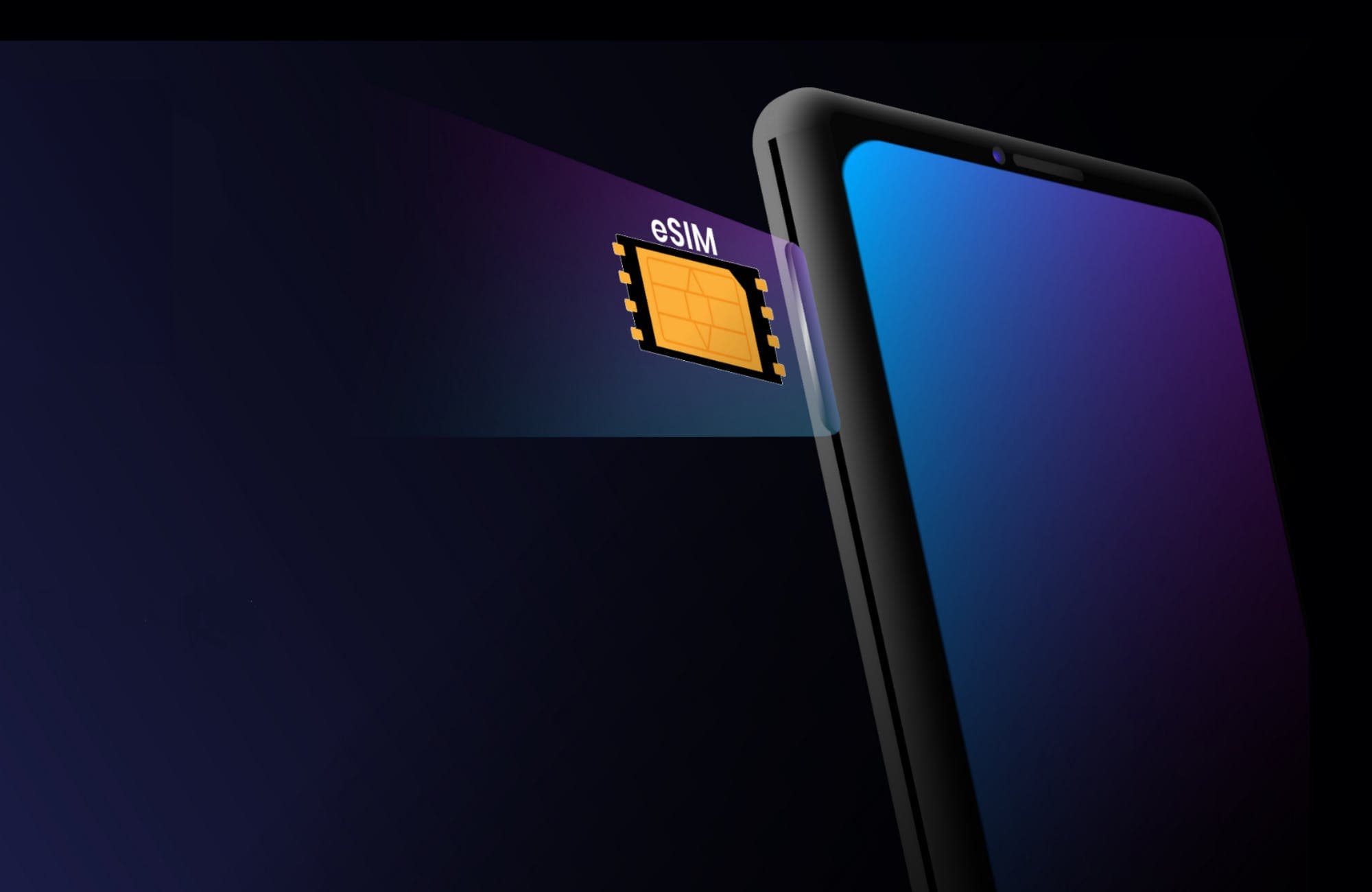
An eSIM is built into your phone rather than a physical chip you insert. Instead of swapping a plastic SIM at the airport, you scan a QR code or install a profile through an app, and your phone connects to a local or regional network almost immediately.
Most phones released after 2018–2020 support it, including iPhone XS onwards and Samsung Galaxy S20 onwards, alongside the equivalent flagship Google Pixel models. On an iPhone, go to Settings -> Cellular and look for "Add eSIM" or "Convert to eSIM." On a Samsung Galaxy, check Settings -> Connections -> SIM Manager for an "Add eSIM" option. A universal check that works on almost any phone, dial *#06# on the keypad - if an EID number appears alongside your IMEI, your phone supports eSIM.
It depends on where you're going and how your network prices roaming. For a lot of travellers, the two aren't mutually exclusive. You can keep your physical SIM in for calls and texts on your existing number, and add a data-only eSIM for browsing, maps and internet-based messaging apps.
| Compare these | Your existing SIM | Travel eSIM |
|---|---|---|
| Setup | None needed, works as soon as you land | Buy and install before you travel (needs Wi-Fi to activate) |
| Cost for EU trips | Free to low-cost on O2, giffgaff, Tesco Mobile; £2–£3/day elsewhere | Often £10–£30 for a fixed data bundle covering the whole trip |
| Multi-country trips | Depends on your network's coverage list | Usually one plan covers a whole region |
| Your UK number | Stays active for calls and texts | Usually data-only; you'll want to keep your physical SIM active too for calls |
| Best for | Short trips on a network with good inclusive roaming | Longer or multi-country trips, or networks with high daily charges |
Dedicated eSIM providers such as Airalo, Holafly, Ubigi and Saily all sell regional Europe or Global bundles. Several UK networks have also started selling their own travel eSIMs alongside standard roaming, for example Tesco International, so it's worth checking whether your existing network provider offers one before buying from a third party.
Whichever you choose, look at three things:
✅ How much data you actually get for the price,
✅ Which local networks it runs on in your destination as coverage varies more than providers like to admit,
✅ How simple activation is if it goes wrong away from home Wi-Fi.
Tip 💡: eSIM pricing and network partnerships shift often enough so it's worth comparing current deals rather than assuming the one you used last time still holds.
This is the one that catches out even the most experienced holidaymakers who've done their homework on roaming. Once a cruise ship sails out of range of land-based networks, your phone doesn't just lose signal, it typically connects automatically to the ship's own satellite-based network, often labelled "Cellular at Sea". This is a completely separate commercial arrangement from your UK network's normal roaming deals, and it isn't covered by an EU roaming allowance, a Go Roam pass, or an unlimited data plan. Rates can run to several pounds per minute for calls and steep per-MB charges for data, and because your phone can connect and start using background data (app updates, cloud backups, notifications) before you've opened a single app, the charges can build up without you doing anything at all.
Giffgaff, one of the few UK networks to spell this out clearly in its own terms, quotes £1 per minute for calls, 30p per text and £5 per MB of data on non-terrestrial networks (its term for aircraft, cruise ships and ferries), which is a useful benchmark even if you're with a different provider.
You could treat your cruise holiday as an opportunity to have a digital detox and as a bonus you won’t need to worry about a phone bill. But if you’re to stay connected when at sea, these rules are easy to abide by, and in short onboard Wi-Fi is your friend.
Put your phone in flight mode as soon as you leave port, and specifically disable data roaming if you want to keep wifi calling available.
Use the ship's Wi-Fi for anything essential; it's not free, but it's a known, fixed cost rather than a wait-and-see cost.
Rely on over-Wi-Fi messaging apps (WhatsApp, iMessage, FaceTime) rather than standard calls or texts, which route over the cellular network and rack up per-minute charges.
Save data-heavy tasks for port days, when you can connect to a local network or café Wi-Fi instead.
If you do need connectivity at sea, buy the ship's package in advance rather than paying the higher pay-as-you-go onboard rate; most lines offer a meaningful discount with pre-booking.
Every major cruise line now sells tiered Wi-Fi rather than offering it for free, and prices have been rising across the board in 2026. Here's how the packages compare for a few of the most popular lines with UK sailings:
| Cruise Line | Basic Package | Premium Package |
|---|---|---|
| P&O Cruises | Essential: £14/day (booked for the whole cruise) or £20/day on board | Ultimate: £20/day (whole cruise) or £30/day on board; adds streaming and video calls |
| Cunard | Essential: around $22/day (whole voyage) or $28 for 24h on board | Premium: around $30/day (whole voyage) or $44 for 24h on board; faster speeds and video calling |
| Royal Caribbean | VOOM Surf + Stream: around $33/day for one device; single Day Pass at $34.99 | Multi-device bundles bring the per-day cost down to roughly $27 if sharing across 4 devices |
Prices vary by cruise company, sailing date and how far in advance you book, and cruise lines update them frequently, so treat these as a guide rather than a quote. Always check the current package prices for your specific cruise before you sail, and pre-book if you know you'll want it, since onboard pay-as-you-go rates are consistently higher.
Roaming rules in the UK now depend entirely on your network, not on a single EU-wide guarantee, so the most useful thing you can do before any trip is check your own provider's terms. Turning off data roaming (not just switching flight mode on) keeps you reachable over wifi without the risk of charges. eSIMs are usually the better option for longer or multi-country trips, especially if your network charges a daily roaming fee. And cruise ships run an entirely separate, much pricier connectivity system that has nothing to do with your normal allowance, so the safest default at sea is flight mode plus the ship's Wi-Fi.
Getting this right protects more than just your wallet on holiday. A phone that hasn't racked up an eye-watering bill, and one you've kept safe with the right accessories, is also a phone that's still in good shape to sell on when you're ready to upgrade. And to protect yourself from the worst happening and your mobile phone being lost or stolen, we’ve covered how mobile phone insurance for travel actually works, and whether you need one.

iOS 27 is here! Check out key features and whether your iPhone is compatible.

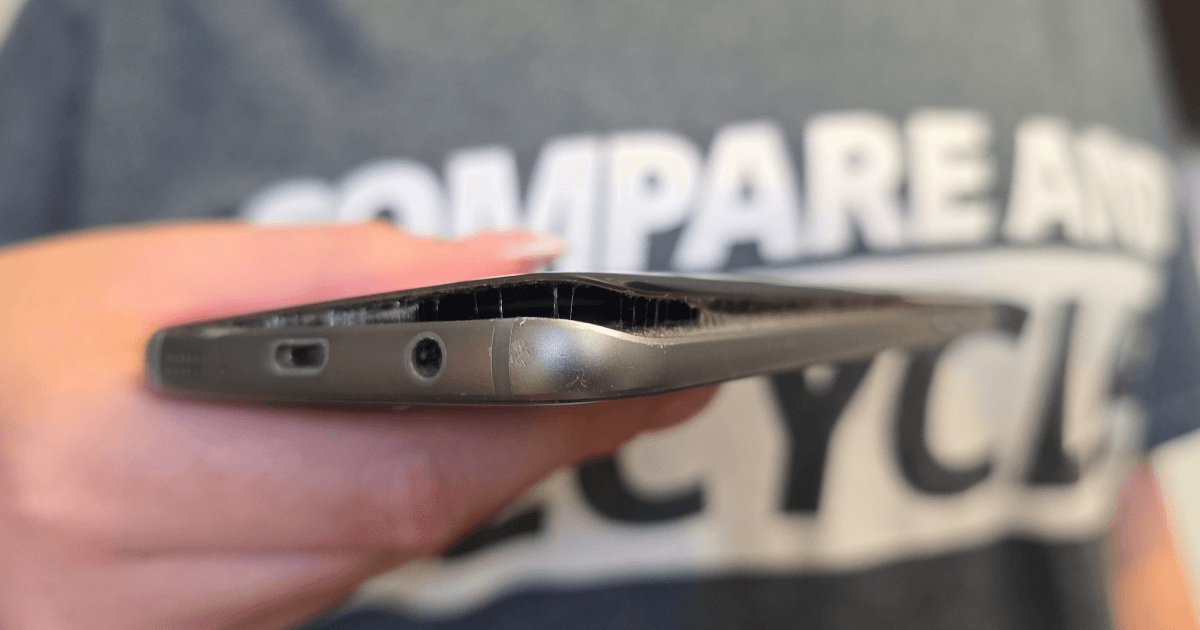
Storing old phones isn’t as harmless as it seems. Here’s why it’s worth digging out your old phone to avoid a hazardous situation.
In this first part of our Holiday Mode On series, we’ll cover essential accessories you need to pack to protect your phone from mishaps when on holiday.