 0330 123 4609
Menu
Apple has finally joined the foldable party after seven years, but was it right to wait?

Written by Sneha Kashyap, Content and PR Executive | Conscious Consumption and Tech Trends
Last updated on 15 September 2026
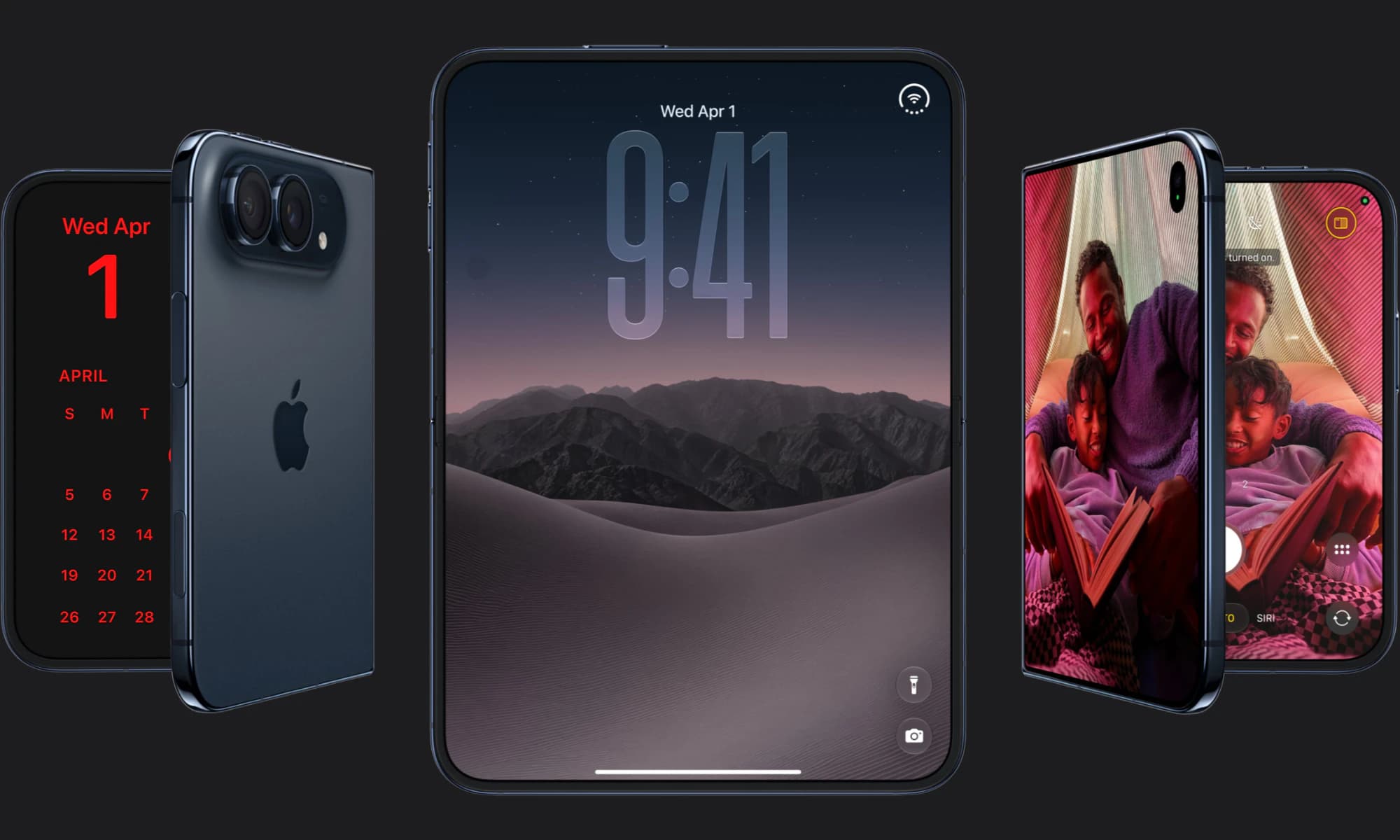
Apple has finally folded.
Seven years after Samsung put the first Galaxy Fold on the market, and after a parade of foldable phones from Samsung, Huawei, Google, and the others, Apple has entered the foldable-phone race with the iPhone Duo. That makes it a remarkably late arrival.
But being first has never been Apple’s focus given that efforts at Cupertino have been channelled instead into making a technology feel like it’s finally arrived. So, has Apple finally succeeded in making a meaningfully radical foldable after seven years of watching its rivals tinker with the technology?
On paper, at least, the answer is a yes. But whether it’s worth £1,999 is a different matter entirely.
Folded, the Duo looks almost like an unusually wide iPhone with a thickness of 11.3mm. Open it, and it becomes the thinnest iPhone yet at 5.4mm, and the 5.4-inch outer display gives way to a 7.6-inch OLED screen - the largest display ever fitted on an iPhone.
That is the basic promise of every book-style foldable: phone in your pocket, tablet in your hand. Nothing new there. But Apple’s magic isn’t about the hinge; it’s about what happens after the hinge has done its job.
The two displays have the same aspect ratio, allowing content to move between them without the jarring transformation that can make some foldables feel like two devices awkwardly sharing a passport case. Apple has also redesigned iOS 27 around the Duo's larger canvas, pushing the bigger screen beyond simply being a very expensive way of watching Netflix. And that may be the true motive here - to convince us that folding glass finally makes sense.
There is a temptation, whenever Apple enters a new product category, to talk about the company as though it has discovered the technology itself. That would be rewriting history.
Samsung's Galaxy Fold arrived in 2019. Huawei, Honor, Oppo and others have spent years experimenting with different hinges, screen formats and approaches to durability.
Apple has had the luxury of watching Samsung build foldable screens to the point that it signed a 3-year contract for Samsung to supply the screen for iPhone Duo. It has seen what works. It has seen what looks clever but becomes irritating after six months. It has had time to study the crease, the hinge, the software and - perhaps most importantly - the question that every foldable eventually has to answer: Why do I actually need this? This is where the Duo gets interesting.
Apple has always been keen on delivering a polished software experience that connects the possibilities of the hardware with the intuitive software within. The Duo is no different in that regard: Apple has built the larger screen around productivity, gaming and media consumption. It supports Apple Pencil, and iOS has been adapted to make better use of the expanded display. In other words, Apple isn't really selling the hinge. It's selling the extra screen.
And that is a much more compelling proposition.
Then comes the bit where your wallet might fold before the phone does.
The iPhone Duo starts at £1,999 for 256GB. The 2TB version reaches £3,199. That makes the Duo the most expensive iPhone on the market. For comparison, Samsung's Galaxy Z Fold 8 launched at £300 less than the Duo in the US, while Apple's pricing is also competing against a generation of foldables that have already had years to mature.
Apple can point to the engineering involved. This isn't a conventional smartphone with an extra screen glued to it. There is a precision hinge, a folding OLED panel that costs $250 each, a titanium construction, dual-battery architecture and a sophisticated thermal system. Apple has also given both displays ProMotion with refresh rates up to 120Hz.
The hardware is undeniably ambitious. But ambition and value are not the same thing. At £1,999, the Duo is asking consumers to pay a considerable premium for something that other manufacturers have already established as a category. And that makes the price, perhaps, the most revealing part of the product - £1,999 is the price of wanting the first foldable iPhone. Apple clearly believes that this novelty is enough reason to compel consumers into laying their hands on the Duo. Others might see it as the price of a non-foldable iPhone plus an iPad, and settle on making the two purchases separately.
Whether the premium price is justified depends on what you actually do with the phone. If you're constantly switching between apps, reading documents, editing content, drawing, gaming or watching video, the Duo could genuinely replace some of the jobs normally handed to a tablet. But if your smartphone life consists largely of messages, Instagram, email, maps and the occasional photograph of your lunch, then £1,999 starts to look less like an investment and more like a very expensive indulgence.
The Duo may be worth £1,999. But it certainly isn't worth £1,999 to everyone.
For all the attention being paid to the Duo's thinness, there is an awkward fact hiding in plain sight. It weighs 254 grams! That is substantially heavier than Samsung's 201g Galaxy Z Fold 8 and Google's 239g Pixel 11 Pro Fold.
Two hundred and fifty-four grams may not sound particularly alarming on a specification sheet. In your hand, however, weight behaves differently.
Credits: Christopher Fryant
The Duo is also 11.3mm thick when folded. That creates an interesting contradiction. Apple can legitimately call it extraordinarily thin when open (just 5.2mm), but when the phone spends most of its life closed, it becomes a considerably heavier object.
A heavier phone held for a few seconds is one thing. A heavier, wider phone held one-handed while scrolling, typing or reading for twenty minutes is another. At a time when iPhone pinky is already commonplace, the Duo could mean more bad news for our hands.
After several hours of use, the continued strain from the added weight can lead to fatigue and increase tension on the tissues, particularly the tissue around the thumb, which is the main finger used to navigate devices. Furthermore, the grip position may change because of the phone's foldable design. Overall, although the additional weight may be small, the repetitive strain and low-grade tension may lead to further stress and injury to surrounding tissues and joints.
The irony isn’t lost here: the phone designed to reduce the need for a tablet might well be the reason it isn’t used.
Foldable phones have spent years trying to answer one awkward question: Can a screen bend hundreds of thousands of times and still look like a screen? Apple's answer is a new folding display with a nano-texture finish designed to minimise glare, alongside a precision hinge and a titanium-based design.
Credits: R/pics (Reddit)
A normal smartphone is reassuringly simple. Glass. Metal. No moving parts. The Duo has a hinge: a hinge means movement, movement means wear, and wear is exactly what you don't want in a device that costs £1,999.
Apple's real challenge, therefore, is one of persuasion: it needs to persuade us that the Duo can survive the indignities of everyday life: pockets, bags, rain, dust, drops, thousands of opening and closing cycles and the occasional moment when someone inevitably tries to fold it the wrong way. Only time will tell if the software giant succeeded in their pursuit.
It seems not everything has been left to chance, however. Apple’s not-so-conspicuous aim in making the Duo is restraint. Apple has not tried to turn the device into a technological circus. It has taken the familiar book-style foldable and tried to make it behave like an iPhone. The company has preserved its ecosystem, brought iOS onto a larger canvas, integrated Pencil support and created photography features that make use of both sides of the device.
Samsung had to spend years persuading Android developers and consumers that foldable phones deserved their own design language. Apple has arrived later, but it arrives with an enormous software ecosystem already in place. And that is its trump card.
Apple is late. Very late.
But no one in Cupertino seems overly fussed about that. Perhaps, that was the aim from the very beginning. To wait and watch while the edges of the foldable landscape were being mapped out, and then strike out when the time was right.
In true Apple fashion, the Duo arrives fashionably late as a polished version of a familiar concept, rather than being rushed to be the first, albeit unfinished.
The original iPhone wasn’t the first mobile phone mobile phone.
The iPod wasn’t the first MP3 player.
The Apple Watch wasn’t the first smartwatch.
And the iPhone Duo isn’t the first foldable phone.
Apple's gift has always been taking complicated technology and packaging it in a way that makes people wonder how they ever lived without it. The Duo is going for the same trick.
This is where the romance ends.
The Duo is fascinating, it is ambitious. But, it is also heavy, and it’s expensive. It’s fundamental proposition - a book-style foldable is anything but new - and the potential hand strain is something to think about too.
Whether that £1,999 phone is worth every penny depends on how much you value the extra screen on offer. For someone who truly needs it, the Duo could be an extraordinarily clever device that merges phone and tablet into a seamless entity. But for everyone else, it could just be an extraordinarily expensive phone.
After seven years of waiting for a foldable iPhone, the software giant has done something intrinsically Apple: it has taken a familiar technology and asked us to want it all over again. You decide if it’s worth your money.
Image credits: Apple
iOS 27 is here! Check out key features and whether your iPhone is compatible.

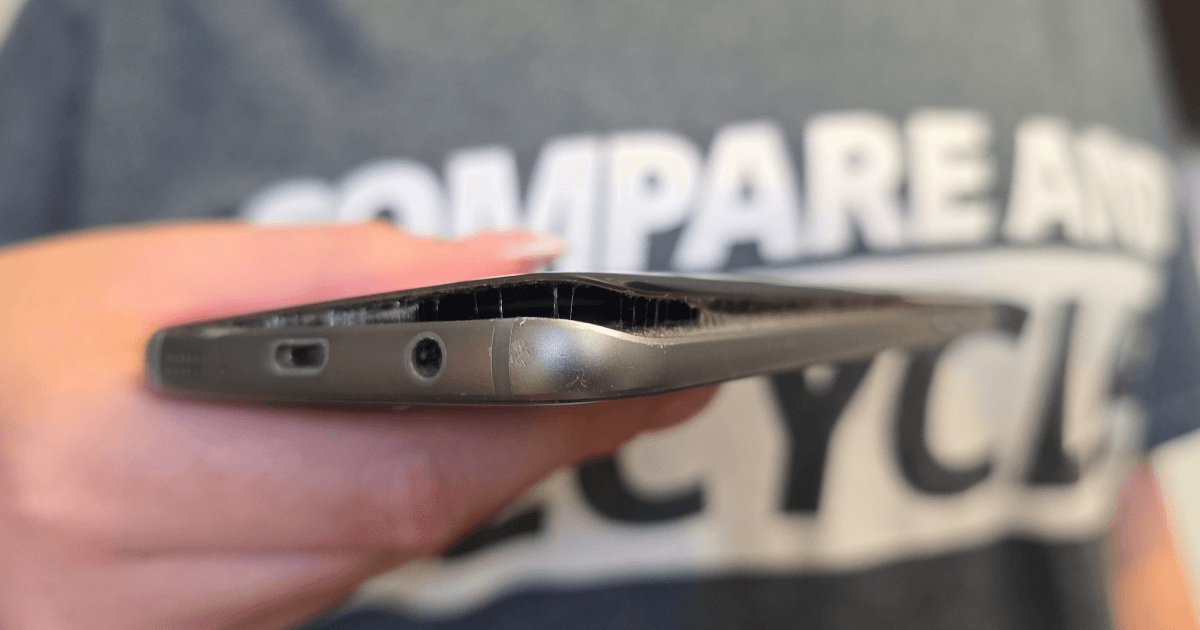
Storing old phones isn’t as harmless as it seems. Here’s why it’s worth digging out your old phone to avoid a hazardous situation.

In this first part of our Holiday Mode On series, we’ll cover essential accessories you need to pack to protect your phone from mishaps when on holiday.


