0330 123 4609
Menu
We've analysed S21–S25 trade-in prices to predict how well the S26 will hold value.

Written by Sneha Kashyap, Content and PR Executive | Conscious Consumption and Tech Trends
Last updated on 17 March 2026
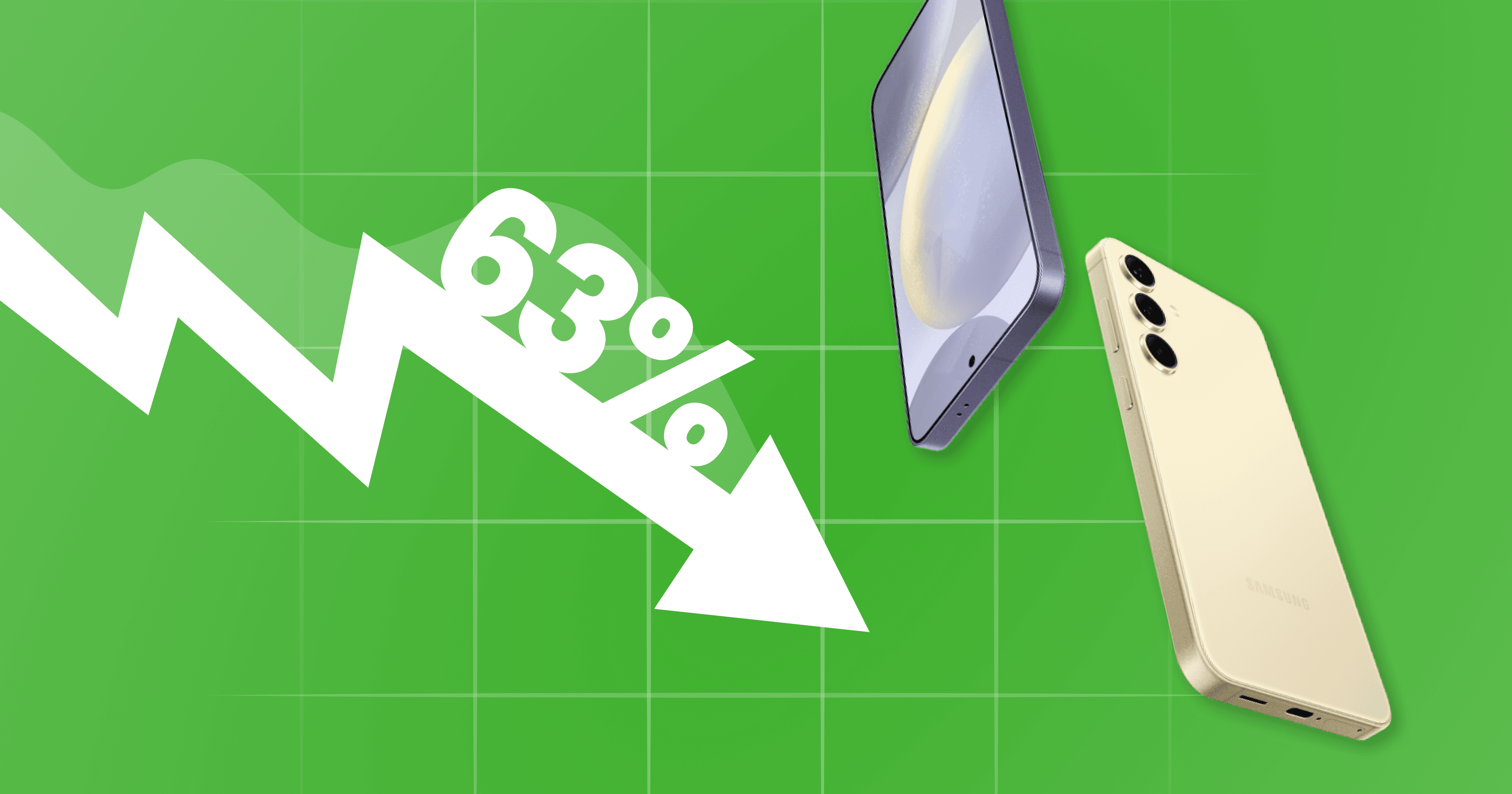
The Galaxy S26 marks the latest addition to Samsung’s flagship portfolio. In the lead-up to the launch of the S26, we analysed on-site trade-in prices of the past five generations of Galaxy S series (S21, S22, S23, S24, and S25) to gain insights into how well these models retained their value during their first year on the market and what the first 12 months for the S26 might look like.
In the smartphone realm, Samsung and Apple hold the largest market share and it’s only reasonable to compare the two in terms of offering and value retention, which, according to our trade-in data, is diminishing for the Galaxy S lineup.
We’ve taken average monthly trade-in prices across the last five generations of Galaxy S series and we found that:
Since the S22 lineup, the first year depreciation has been slowing down for Samsung flagships: the S22 series depreciated by 60%, S23 by 59%, and S24 by 58%. However, the S25 has reversed this trend by setting the record and depreciating at 63% in the first 12 months.
The S25 also has the steepest drop across the last five generations as it loses 10 percentage points from its starting depreciation at 53% to 63% after its first 12 months.
Compared to the iPhone 16 which depreciated at only 45% on average after its first 12 months, Samsung Galaxy S ranges lose dramatically more value with the S25 dropping by nearly 20 percentage points.
| Model | RRP | First 12M depreciation £ | First 12M depreciation % |
|---|---|---|---|
| S25 512 GB | £979- | -£668 | -68% |
| S25 128 GB | £799- | -£517.87 | -65% |
| S25 256 GB | £859 | -£550.50 | -64% |
| S24 Plus 512 GB | £1,099 | -£701.00 | -64% |
| S23 Ultra 1 TB | £1,599 | -£1,014 | -63% |
A quick glance at the above table reinforces the primary trend this year - that the Galaxy S25 is the worst depreciating series across five generations. One of the reasons for this might be due to the series only delivering incremental upgrades over its predecessor. Being marketed as a “true AI companion” didn’t translate into better value retention either. Given the user sentiment towards AI-powered phones and increased searches around how to disable certain AI features, consumers are questioning whether these upgrades are worth it. As such, the future isn't looking so positive for upcoming Galaxy S series, and smartphones, in general.
Another thing you’ll notice is that the top 5 list primarily features higher capacity models as they’re the most expensive to buy, and therefore, relatively less popular among consumers. But with trade-ins extra storage doesn’t equal more value, with demand playing a bigger role instead. Given the poor value retention across latest flagships, smartphone manufacturers need to pay attention to the resurgence of retro tech in 2026 and revive old school features like microSD card slots and audio jacks. In the meantime, if you’re upgrading, we’d recommend going for the lower capacity models.
By the end of its first year on the market, the Galaxy S25 512 GB lost the most value at 68% or £55 per month. Samsung priced the phone at £979 when it was launched, but the device is currently valued just above £300.
Across the S21 to S24 generations, depreciation followed a remarkably consistent pattern: models had an initial value drop of around 52–53% at launch, before settling near 58% by the end of the first year - a relatively modest additional decline of 5–6 percentage points. The Galaxy S25, however, breaks away from this trend. While its starting depreciation mirrors previous models at roughly 53%, its first-year value retention weakens far more sharply, averaging at 63% total depreciation - nearly a 10-point additional erosion and a clear disruption to the stability seen in earlier S-series cycles.
| Model | RRP | First 12M depreciation £ | First 12M depreciation % |
|---|---|---|---|
| Galaxy S21 5G 128GB | £769.00 | -£411.57 | 54% |
| Galaxy S24 Ultra 256GB | £1,249.00 | -£677.54 | 54% |
| Galaxy S24 Ultra 512GB | £1,349.00 | -£743.08 | 55% |
| Galaxy S24 256GB | £859.00 | -£475.30 | 55% |
| Galaxy S21 5G 256GB | £819.00 | -£452.83 | 55% |
Another generation of the Galaxy S series has come and gone; and yet, none of the S25 models made the best value retainers top 5. With its record-setting depreciation after 12 months , it is not surprising that the S25 didn’t make the cut when 5 years ago the Galaxy S21 5G (128GB) retailed at £50 less and retained 46% of its original value after 12 months.
What's also quite surprising is seeing the Galaxy S24 256GB feature on the list instead of the 128GB variant, but there’s a perfect explanation for it. During pre-order time, Samsung had a deal going when for the same price of 128GB you could get double the storage. Given the price difference of £50 between the variants, the deal was hard to pass on and 128GB was left on the sidelines. Consumers were walking away with 256GB models which put more of those in circulation creating more favourable trade-in prices later on.
The S25 is even more of an anomaly as historically, base models have withstood depreciation the best during their first 12 months on the market when smartphone depreciation is the highest. In Samsung’s 2025 lineup, however, the S25 Ultra (256GB and 512 GB) have retained the most value across 12 months losing 58% compared to the base S25 128GB dropping by 65%. S25 sales data aligns with this as the Ultra variants had sold the most among the series, clearly indicating their popularity among consumers.
Looking ahead, the S26’s depreciation will likely hinge on one critical factor: memory costs. With RAM prices experiencing an unprecedented increase owing to the explosion of AI-data centres, Samsung’s strategy of making S26 ‘the AI phone’ may not pay off.
The smartphone giant’s resources will also play a key role in determining whether S26 prices will soar in the wake of the RAM crisis. If Samsung has secured enough memory supply, launch prices for the S26 could remain relatively stable. However, if it needs to acquire more memory units, S26 manufacturing costs will inflate and the increase will be passed on to the consumer.
Ultimately, it’s Samsung’s pricing policy that will determine how its flagship series will fare depreciation. If it keeps launch prices tight, first-year depreciation for the S26 could stabilise closer to the historical 57–60% range making the S25 range just an outlier. But, if it repeats the S25‘s aggressive promotions, the S26 could face an even steeper first-year depreciation and reach 70% mark.
The Galaxy S25 marks a turning point for Samsung’s flagship depreciation curve. After three consecutive generations of improving first-year value retention, the S25 reversed the trend and recorded the steepest drop in five years.
While earlier models followed a stable and predictable pattern, the S25 experienced accelerated value erosion, particularly across higher storage variants (512GB and 1TB) and base models, thereby widening the gap between Samsung and Apple in first-year value retention.
If you’re looking to buy a new phone, keeping depreciation trends in mind is key. We recommend opting in for an Ultra model and waiting at least 3 months after release to enjoy post-release deals and avoid paying a full retail price.
iOS 27 is here! Check out key features and whether your iPhone is compatible.

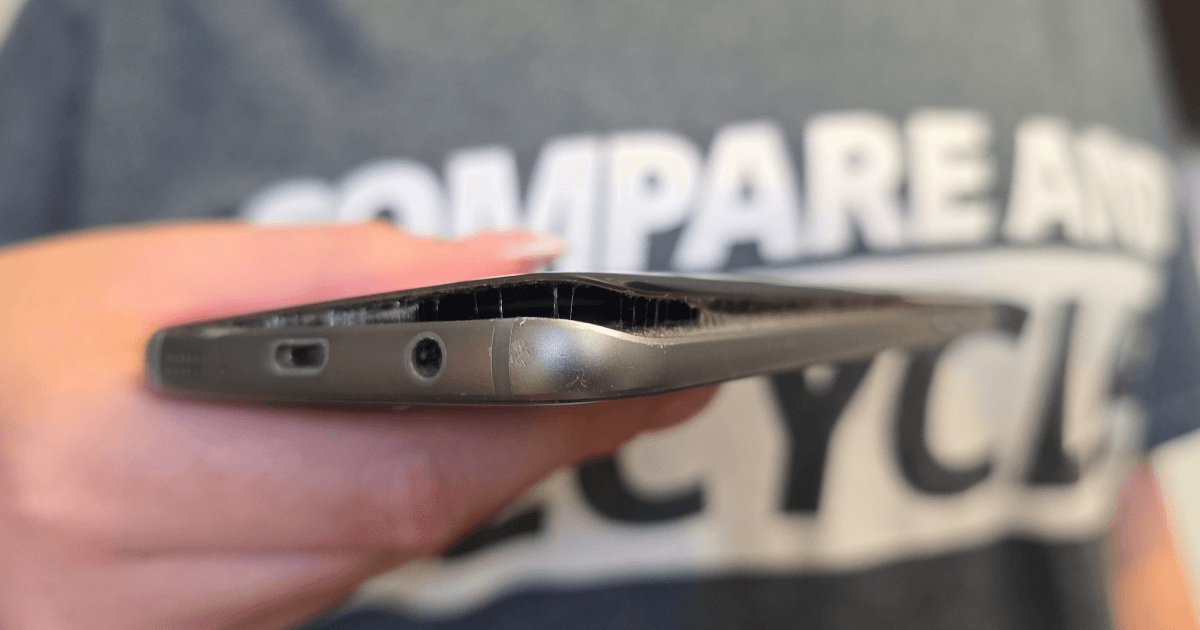
Storing old phones isn’t as harmless as it seems. Here’s why it’s worth digging out your old phone to avoid a hazardous situation.

In this first part of our Holiday Mode On series, we’ll cover essential accessories you need to pack to protect your phone from mishaps when on holiday.