0330 123 4609
Menu
Storing old phones isn’t as harmless as it seems. Here’s why it’s worth digging out your old phone to avoid a hazardous situation.

Written by Yasmin Maagbe, Content and PR Executive | Environment and Consumer Electronics
Last updated on 6 August 2026
Battery safety doesn’t have to be complicated. But storing old mobile phones inappropriately in the home pose unexpected safety and environmental risks. Learn why recycling or selling your old phone is the safe option.
Got an old phone tucked away in a drawer or forgotten under the bed? Most of us have at least one old mobile phone gathering dust somewhere at home and it’s easy to convince ourselves we’ll need it one day for a ‘just in case’ moment that rarely comes. In this guide we’ll explore why storing old mobile phones at home isn’t always the safest or smartest option, the potential risks you should be aware of and why recycling or selling your unwanted device is a better choice for both the safety of your home and the environment.
It might seem perfectly harmless to keep an old phone in a drawer, cupboard or under the bed, but leaving unused devices around your home can create risks that many people simply aren’t aware of.
One of the biggest concerns is the battery. Almost every smartphone released over the past decade contains a lithium-ion battery and while these batteries are designed to be safe during normal use, they don’t last forever or cope well with being stored.
As they age, the chemicals inside the battery slowly degrade. Even if a phone is switched off, the chemical processes inside the battery keep happening, especially if it’s stored in unsuitable conditions. External heat, prolonged discharge, physical damage or just electrolyte decomposition can cause batteries to expand or worse explode. Phones left in lofts, conservatories or garages are particularly vulnerable because temperatures can fluctuate dramatically throughout the year. Likewise, a phone forgotten at the bottom of a drawer may have heavy objects placed on top of it, increasing the risk of accidental damage.
It’s important to understand that although smartphone fires are relatively uncommon, the risk increases when older devices with ageing lithium-ion batteries are stored inappropriately for long periods of time.
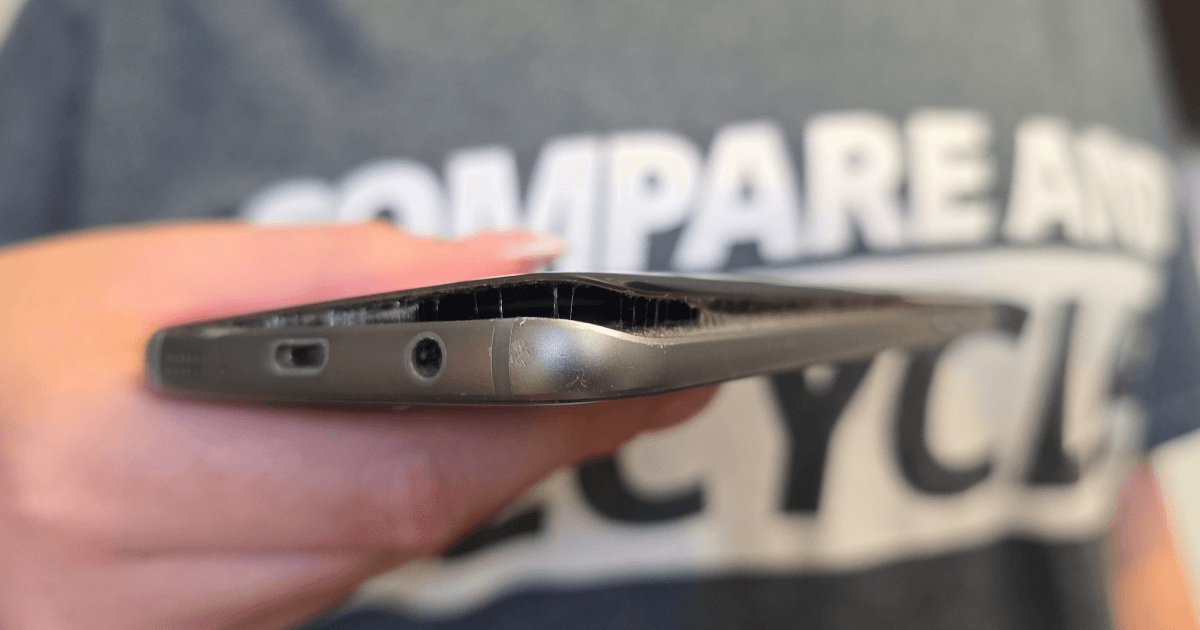
Lithium-ion batteries work by moving charged ion particles between two electrodes in a ‘pool’ of gel electrolyte. Over time, this chemical process naturally becomes less stable as the battery ages and the gel breaks down causing trapped gasses to build up pressure. This extra pressure is looking for a way out and in some cases, this can result in batteries swelling up and you may notice the back cover lifting away, gaps appearing or the display starting to bulge. In extreme circumstances, the phone can start smoking, catch fire or even cause a small explosion.
In recent years, expanding batteries have become a widely discussed issue especially in various forums where people have reported finding their old phone under the bed with the battery expanded and popped out the shell. This can be really dangerous so if you notice that your phone has started to bulge, the screen lifting or the battery appears swollen, do not charge the device.
It’s also important to not puncture the battery or force the phone to close again, instead follow the steps below to remove the swollen battery and take it to a specialist battery recycling or electronic waste collection point as soon as it’s safe. Don’t place your device with a swollen battery back in storage and if you’re keeping devices in an empty drawer, garage or under the bed, move your storage location away from flammable materials because this can result in it being a serious fire hazard.
A swollen phone battery doesn’t happen overnight. It’s usually the result of heat, age, sitting at 0% charge state or physical damage. The good news? A few simple habits can go a long way in keeping your battery intact.
The first step we would take is to avoid storing your mobile phone all together!
If you know you’re planning on getting a new mobile phone, then take the necessary steps to sell or recycle it responsibly to avoid any overlap and avoidable hoarding.
If you absolutely have to store your mobile phone, then you’ll need to periodically recharge it and keep note of when you do. This is because you want to avoid keeping your phone stored with the charge below 0% for prolonged periods of time.
One of the biggest causes of battery swelling is extreme temperatures. Avoid storing your phone in direct sunlight, inside insulated boxes or anywhere with sufficient air flow. If these conditions aren’t met, then extreme temperatures might accelerate the degradation your phone’s lithium-ion battery.
Keeping your battery between 20% and 80% is ideal for long-term storage. So when you’re planning on keeping your phone as backup, charge it to 80% and turn off any background tasks, such as Find My location tracking to minimise the strain on the battery. Set a calendar reminder in a month's time to turn the phone back on and check how much charge is left. You will be surprised, but even being switched off the battery will still lose charge. This way you can estimate how many months it will take for your phone to drop below 20% charge and set a reminder to recharge it back to 80% when that time runs out.
If you think your phone battery has already started to swell, don’t ignore it. A swollen lithium-ion battery is a safety hazard and should be removed safely as soon as possible. Before you attempt any removal:
Power the phone off immediately and disconnect it from any charger.
Don’t puncture, bend, squeeze or apply pressure to the battery as this could cause it to leak, smoke or even catch fire.
Work in a well ventilated area, away from flammable materials.
Wear a protective mask, gloves and eye protection when removing the battery yourself. Try not to inhale the fumes, if the battery does start to smoke.
Use non-metallic tools where possible to reduce the risk of accidentally short circuiting the battery.
Never dispose of a swollen battery in your household bin. Instead take it to a certified battery recycling or electronic waste collection point. Under no circumstances should you use postal services to dispose of your swollen battery.
If during the removal, the battery starts to smoke or catches fire, treat it like any other fire - do your best to contain it and call 999 emergency services.
Now that you know how much of a hassle it really is to store old phones at home, especially when you have multiple devices, consider recycling or selling your phone. It’s easy to wipe your data off of them and prepare them for sale, not to mention it’s extremely easy to trade old phones in though Compare and Recycle.
Always give your phone a quick inspection. If you notice signs of battery swelling, overheating or physical damage, avoid charging the phone again and ensure it is handled as safely as possible.
❗Note: It is important to note that if your mobile phone battery is already swollen, then it cannot be traded in by post, it needs to be physically taken to an e-waste recycling facility with the battery removed from the phone. This is because it is an extreme fire hazard and therefore poses a huge risk during transportation.
For us, an old phone sitting in a drawer serves little purpose beyond collecting dust, and recycling or selling it instead offers benefits for you and the environment. If your phone is still in working condition, it may be refurbished and sold to someone else, extending its lifespan by several more years. It also reduces demand for manufacturing brand-new smartphones, a process that requires significant amounts of energy and of course raw materials.
It’s also important not to forget that even if your phone no longer works, it may still have value! Recycling facilities can recover precious metals including gold, silver and copper, along with other precious earth materials that can be reused in future electronics. All of these things can reduce the need for new mining operations and help conserve finite natural resources whilst helping to tackle the UK’s growing electronic waste problem. Not to mention, many phones retain surprising resale value, even if they’re a few years old or have minor cosmetic damage. So it’s definitely worth checking out how much your old phone could be worth and get some extra cash in your pocket!
The majority of people do not know the hidden risks of keeping your old phones stored at home and also how much value an old phone holds! We hope this blog shows you that you shouldn’t underestimate the importance of your unused phones, whether it be selling it to earn some extra cash or making sure you know how to safely recycle it to avoid dangerous situations in the home and also to others if not properly disposed of.
Apple has finally joined the foldable party after seven years, but was it right to wait?


iOS 27 is here! Check out key features and whether your iPhone is compatible.

In this first part of our Holiday Mode On series, we’ll cover essential accessories you need to pack to protect your phone from mishaps when on holiday.